EthnoGraphics: sketching people who craft sustainability
About EthnoGraphics
EthnoGraphics is the methodology underpinning the work of this research. It plays with the word "ethnography" and "graphics", because it uses graphics languages and elements — like sketches, drawings, comics, and infographics — to collect and show data.
EthnoGraphics is a mixed-method approach to study cultural dynamics generated during craft-led events focused on sustainability. It combines:
- graphic ethnography
- oral history
- an online showcase and open resources
EthnoGraphics aims to observe, describe, and understand how engaging with sustainable making allows people to reflect and learn about the environment, the climate crisis, consumerism, and production.
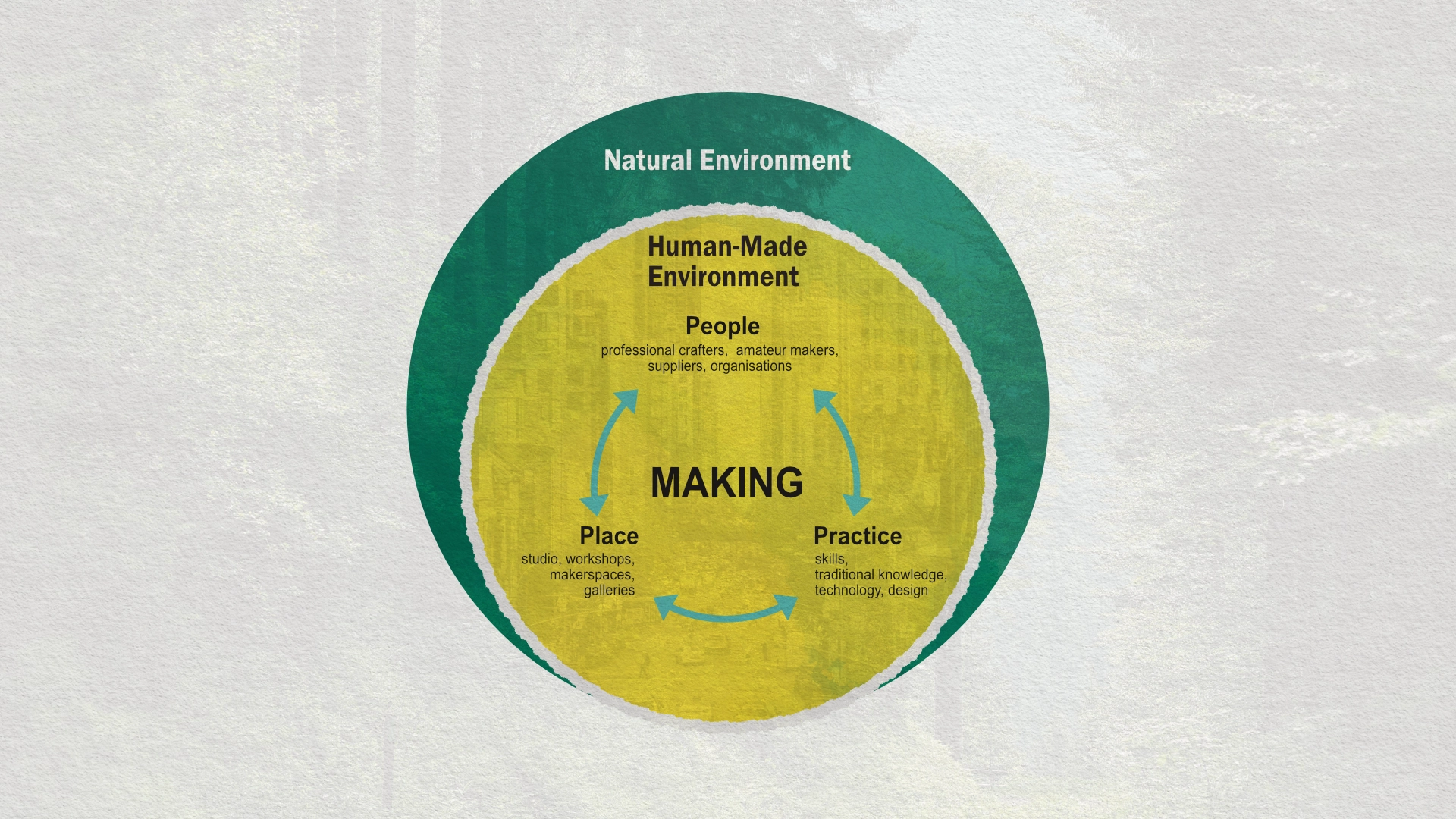
The study focuses on the socio-cultural function of craft as a means to worldmaking, that is the way, when people participate in social craft events as workshops, demonstrations, or craft gathering, that particular views of the world emerge. Within it, this PhD focuses on the eco-social aspect, meaning that it aims to discover how participating in sustainability-oriented social craft allows for participants to enhance their understanding of the environment, their place within it, and their agency in the building of a more ecological society.
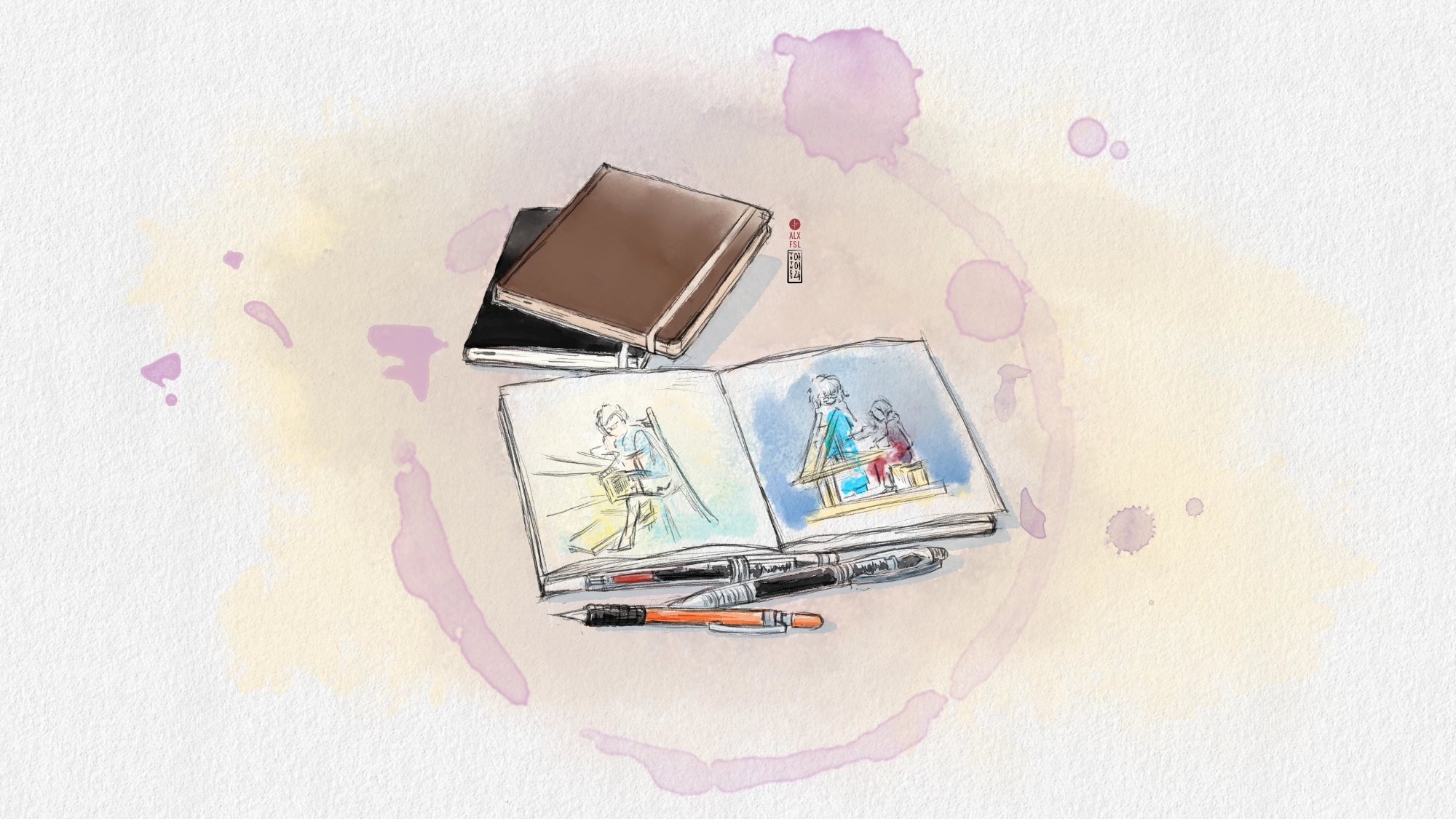
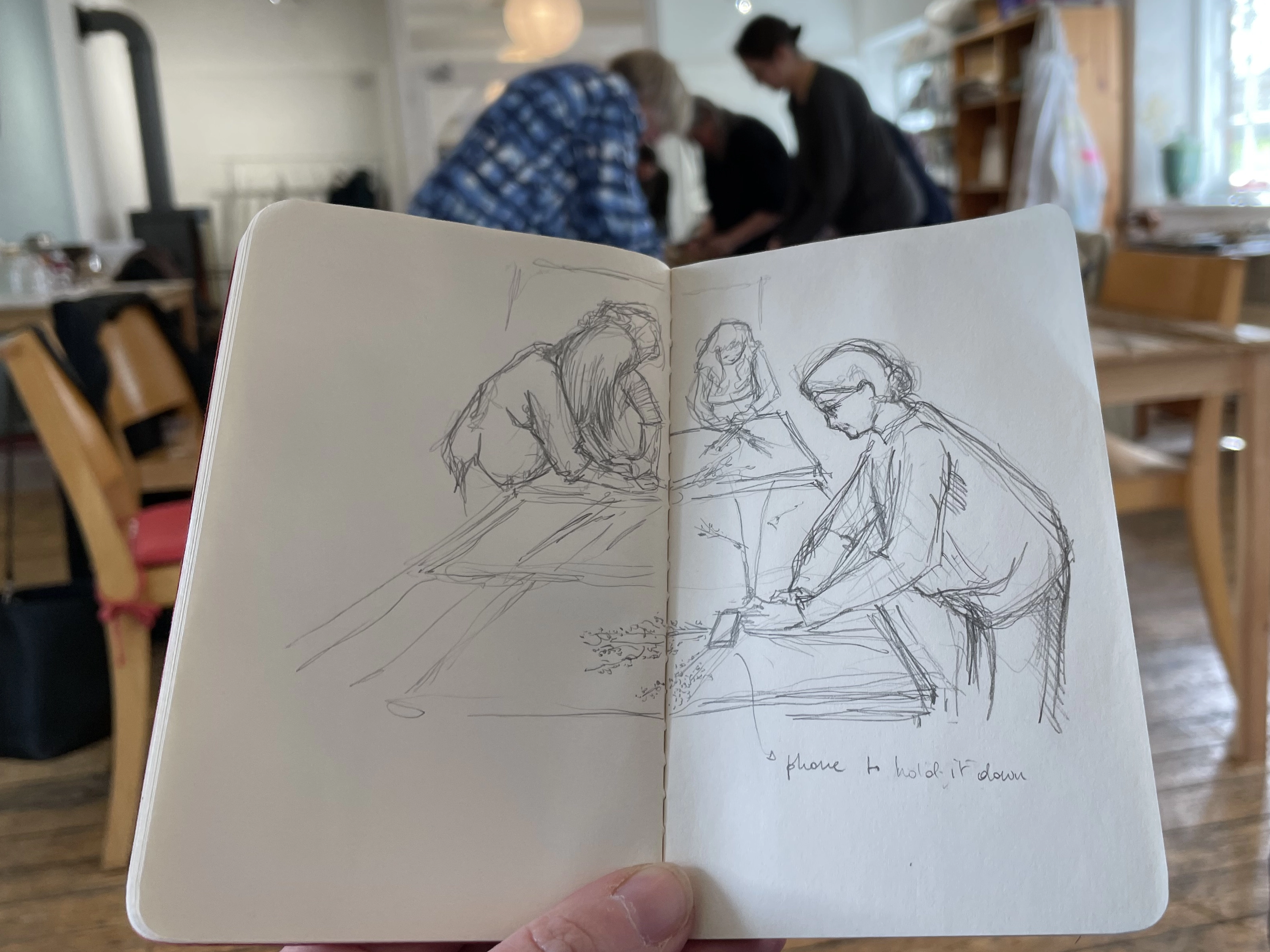
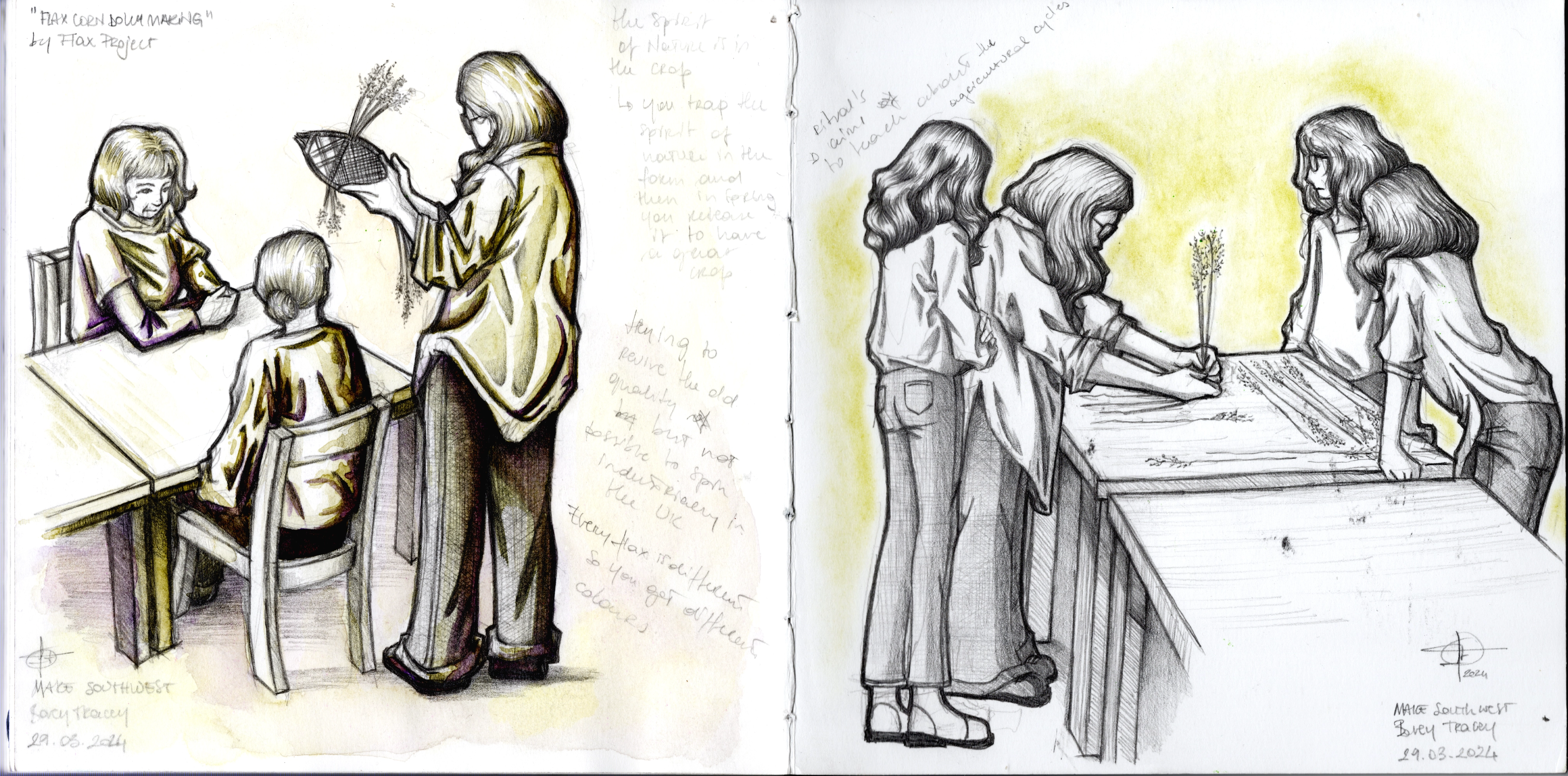
The graphic ethnography approach is based on observational sketching, a participant observation activity where drawing and sketches are the researcher’s primary method of notetaking and data gathering.
The oral history approach comprises semi-structured interviews with organisers and facilitators of craft initiatives and spontaneous conversations with participants in the programmes’ events.
The online space is this website built along as the research progresses to showcase and narration of the findings. This is meant to be a virtual home of the project. Beyond regular updates, the Resources page is a work-in-progress space for anyone who visit it to engage with the initiatives presented or find inspiration and guides for starting their own. In the future, this website will host a permanent collection of the artworks of the research designed as a permanent online interactive gallery for people to trace the evolution and findings of the PhD.
This website and the methodology page are updated regularly.
Taking Part in the Study
Etnographics field work has now concluded and data have been collected. I am now processing and analysing them. If you participated in it and left your contact email, you will receive updates on this stage soon. Thank you again for taking part in the study. If you have any question, please write to me at a.fasoli@kingston.ac.uk
How to participate
Everyone involved in social craft initiative with a sustainable/environmental driver can take part in the project. Both adults and children are welcome.
If you identify with one of the description below, please write an email to a.fasoli@kingston.ac.uk with a description of your event.
Who can participate: Adults (over 18 years old)
1. You are leading a sustainability-oriented craft programme or initiative
You are a person directly involved in the creation, organisation, and/or facilitation of sustainable craft initiatives in Devon or the Southwest. You can participate in the research if you are above 18 and:
- you are or have been part of the organisation committee of a craft event (like organising a workshop, a craft fair, a craft festival, or a showcase)
- you are or have been a founder/CEO/employee of a craft organisation or business that organises, promotes, and deliver craft events and craft-related activity
2. You facilitate and organise regular workshops or events within a craft programme or initiative
You are a person facilitating and/or conducting a sustainable craft workshop in Devon or the Southwest. You need to be above 18 and being and:
- part of the organisation committee of a craft event (like organising a workshop, a craft fair, a craft festival, or a showcase)
- you are a maker delivering a workshop as part of a craft programme,
- you are a founder/CEO/employee of a craft organisation or business that organises, promotes, and deliver craft events and craft-related activity,
- you are facilitating a craft-related activity.
3. You participates in a craft events (like a workshop) but are not part of the organisation or leadership
You are a person participating in a sustainable craft workshop in Devon or the Southwest. You need to be above 18 and you must be:
- a maker selling, showcasing, or performing at a craft event,
- someone who is attending a craft event like a fair, a festival, a showcase, or a craft performance
- someone who is attending a craft workshop or lecture,
- someone who is participating in a craft-related activity
"Young EthnoGraphics": Participating if under 18
Children and young people are welcome to participate in the project: if you are running a programme or an initiative for children and teenagers and would like it to be featured in this study, please write to me, as for the events with adults, I'll be happy to join and drawing you and your young participants. If they want, at any point, they can talk to me about what they made and why they made it. Young people above 16 can decide to take part without parental permission, while for children between 5 and 15 parental or teacher's permission is required.
Detailed information and documents for participants
Adults (over 18 years old)
If you have being invited to participate, please read the Participant Information Sheet and sign the Informed Consent accordingly:
- You have been invited for an interview: Participant Information Sheet for interview
- You are running a workshop/event where Alex will be sketching: Participant Information Sheet for facilitators of craft events
- You are participating in a workshop/event where Alex will be sketching: Participant Information Sheet for participants in craft events
The link to the respective Informed Consent can be found at the end of each Participant Information Sheet. Signing the Informed Consent is mandatory to participate in the study.
Young People over 16 years old
You don't need your parent's permission to participate in this project.
Young People between 8 ans 15 years old
Please read it with your parent, guardian, or teacher. You will need their permission for taking part in the project.
Newsletter and updates
If you simply would like to be updated about the advances of the PhD without being directly involved in the study, you can sign up to my very occasional newsletter with the last updates: