LearnBI0N Conference "Down to Earth" | Stockholm 2022
On June 17th, 2022, I participated in the EU project Learn BI0N 2's conference “Down to Earth”, in Stockholm (Sweden), as part of the delegation of AK0 - architettura a kilometro zero, a nonprofit I co-founded and had been working in for about 15 years. The goal of the conference, organised by the Swedish design studio Architectural Environmental Strategies (AES), was to promote the experience of the BI0N project throughout a broader discussion on contemporary architecture and design strategies for alternative, more sustainable living. I had the honour of presenting my research alongside speakers from the BI0N partnership and major representative of the Swedish sustainable design and architecture community.
This event was part of the programme Open Studio at Färgfabriken in Stockholm. Launched back in 2017, *Open Studio* aims to support the initial ideation and design phases of creative initiatives, by offering a place for professionals and local communities to meet and share.
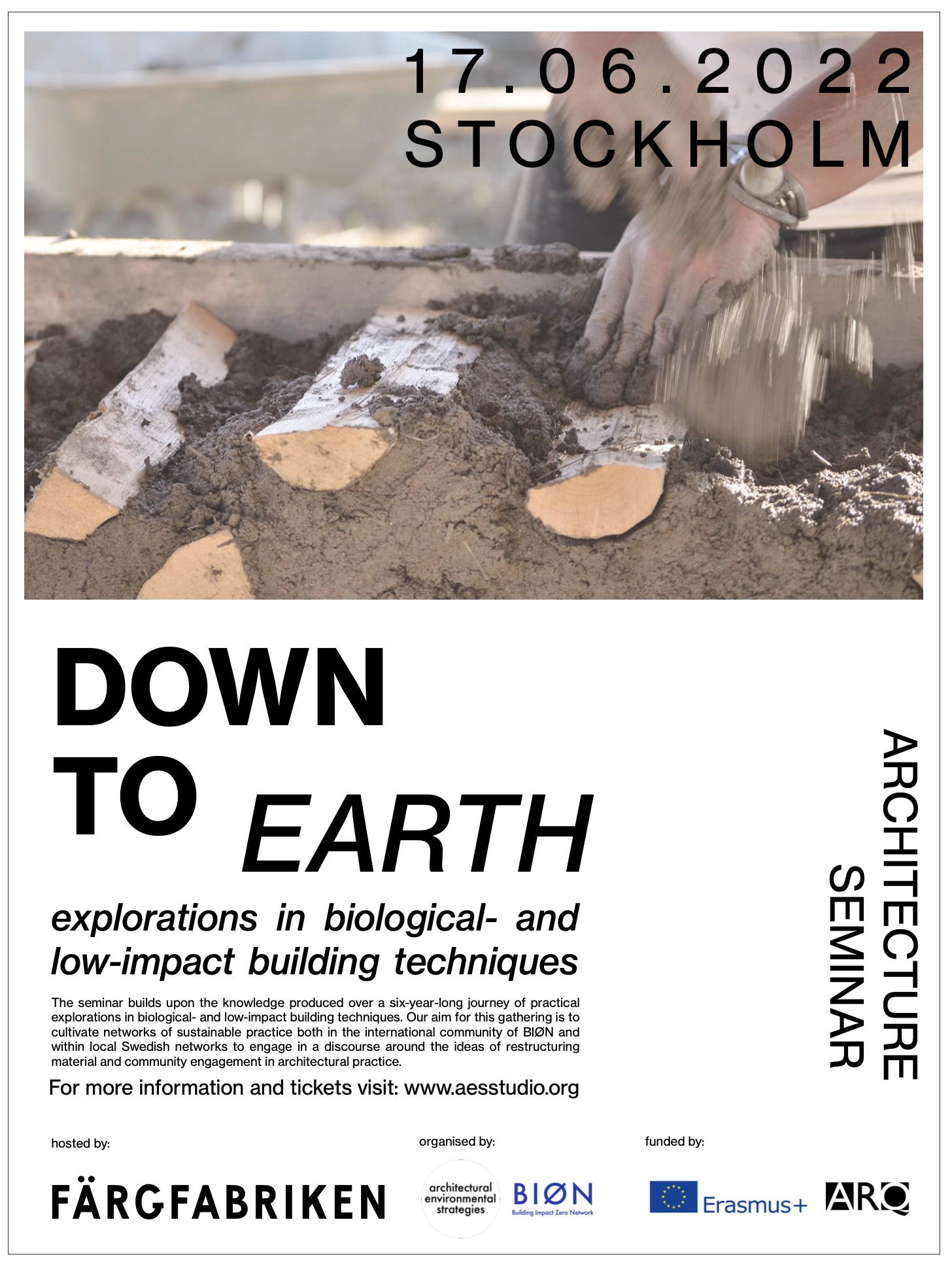
Chaired by Helen Runting, architect and design theorist, the day had been an occasion for sharing practices and vision on the role architecture and design play against the current ecological breakdown and social challenges.
Natural materials and unconventional building practices were the main protagonists on stage: beyond being a more sustainable alternative to industrial materials, speakers underlined how their use could be a way to re-establish a connection with our roots and how they represent a resource to experiment with new building languages. In this regard, research and new technologies play a crucial role, as they open up opportunities for new scenarios to emerge.
However, techniques and materials — either new or traditional — cannot be disjointed from a broader critical discourse on social and cultural change. Participatory design and co-design initiatives cannot happen in a vacuum: local identities and eco-cultural context influence dramatically the effectiveness of those strategies. As Italian architect and professor Alessio Battistella highlighted, during emergencies and conflict collective identities assume a decisive, moral social role that, though necessary and fundamental, might lead to unexpected challenges on top of the already precarious and critical situations: in this circumstances, design is even more a negotiating act between necessities and aspirations, where the art of building, techniques and their development become a means for re-affirming people's belonging to the land and for self-determination, while also reshaping relationships and visions for imagining new ways of inhabiting.
The conference was an opportunity for debating various aspects of architecture and design within a sustainability framework, where the craft of architecture is defined beyond the ensemble of building practices as a tool for a perpetual dialogue between the environment, society, and politics, whose goal should be to offer creative and tangible living alternative for everyone, instead of serving only some.
My presentation, "Crafting a Place and a Place for Craft", drew on my exploration on making cultures and connected it to the architecture work carried on by AK0 and BI0N, explaining why it is fundamental to understand the deep relation between making — which architecture and construction are an expression of — and the environment.
An expanded and updated essay version of my talk will be available soon on this website.